



By, Gokite Tour
- 1.9k Views
- 7 Min Read
- (0) Comment
What Historical Sites Should Be Included in a Sudan Travel Itinerary?
Sudan is a country of great historical richness, where the ancient civilizations, the medieval kingdoms, and the Islamic tradition meet. Tourists are able to visit royal pyramids, religious temples, and cultural sites that date back thousands of years. Planning a trip to Sudan starts with securing a Sudan Visa from Oman, which enables one to visit these historical wonders in a safe and legal manner. The Nubian deserts and the banks of the river Nile provide different versions of their stories carved in stone and buildings.
Having an organized schedule will make sure that the tourism industry visitors do not miss out on any important historical landmarks in the country. The awareness of the Historical Sites Should Be Included in a Sudan Travel Itinerary will assist the visitors in balancing between sightseeing and cultural immersion. Historically diverse, Sudan boasts of Pharaonic temples to Mahdist-era monuments and is the perfect place to visit when one wants to experience the past or even when on a casual trip.
These Historical Sites Should Be Included in a Sudan Travel Itinerary
Ancient Nubian and Pharaonic Sites
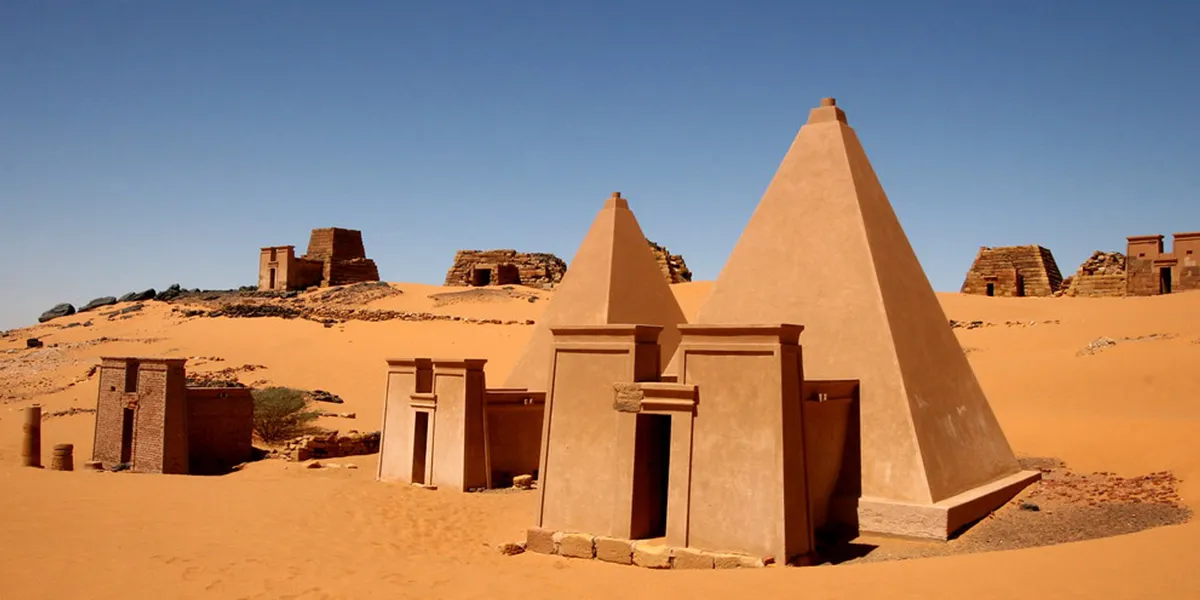
Pyramids of Meroë
The Pyramids of Meroe are royal pyramids of burial of the Kingdom of Kush, which is characterized by steep structure and sandstone materials. These are iconic buildings that are a UNESCO world heritage site and they give profound insights into the Nubian civilization. The Historical Sites Should Be Included in a Sudan Travel Itinerary to visit Meroe because it is a place to see the unique view of ancient African architecture and burial sites, which makes it an essential landmark.
Nuri and El Kurru
Nuri and El Kurru accommodate Kushite royal tombs and pyramids of the mighty kings and queens. The sites show how the Kushite kingdom was relevant in history and how it was culturally related to ancient Egypt. Tourists will be able to visit elaborate burial rooms and pyramids that demonstrate outstanding craftsmanship. Nuri and El Kurru are the places every person must visit to get an idea of the Pharaonic past of Sudan and the legacies left by the royal dynasties.
Archaeological Sites along the Nile
Temple of Soleb
Ancient Egyptian architecture in Sudan can be described as the Temple of Soleb, which was constructed during the reign of Pharaoh Amenhotep III. This location is of religious significance, and its great columns and inscriptions provide us with an idea of the Nubian religion. Tourists and historians are attracted by its amazing structure and carvings that are preserved. A visit to the Temple of Soleb will enable tourists to see a mix of the Egyptian and the Nubian cultures along the Nile that reveals the spiritual richness of this ancient land.
Jebel Barkal
Jebel Barkal is a holy mountain that is topped with ancient temples, which were worshiped by the Nubians and Egyptians. The nearby ruins of the temple give a glimpse into the history of the area in terms of politics and religion. Being a spiritual center, it was the center of worship of the god Amun and local kings. Jebel Barkal is a historical site worth visiting on any historical tour of Sudan, as tourists are able to gain a deep insight into the religious and cultural importance of the Sudanese Nile valley.
Historic Cities and Cultural Centers
Old Dongola
Old Dongola also has the remains of medieval Christianity (churches, monasteries, and fortified structures). These archeological remains offer intriguing facts about Nubian Christian kingdoms that existed many centuries ago. Old Dongola is a must-visit place for history lovers, as it shows how the African and Christian cultures interlaced. Including this site ensures that historical sites that should be included in a Sudan travel itinerary are comprehensive, covering religious, cultural, and architectural aspects of Sudan’s rich heritage.
Khartoum historical landmarks
The capital of Sudan, Khartoum, is a mixture of colonial architecture and modern museums. The National Museum has Nubian artifacts and ancient relics, which give a chronological account of the history of Sudan. A stroll along the streets with historic buildings along the way will be the manifestation of the changing identity of the country. To the tourists, Khartoum can be used as a point of entry to learn about the complicated history of Sudan and is used as a portal to other cultural hubs. The historical sites are essential in a complete itinerary of Sudan.
Islamic and Medieval Heritage Sites
Omdurman historical sites
Omdurman is characterized by Mahdist-era architectural structures such as tombs, fortifications, and mosques as a representation of the 19th-century Sudanese Islamic history. The city exposes military, religious, and cultural successes, which makes it an interesting tourist attraction. Incorporating Omdurman ensures that historical sites should be included in a Sudan travel itinerary, as it helps to portray both historical Islamic heritage and the contemporary Sudanese culture. Guided tours assist the visitors to value the importance of these monuments in the history of Sudan in general.
Sufi shrines and mosques
The Sufi shrines and mosques of Sudan are the symbol of centuries of spiritual practice and cultural tradition. These places are the places of worship, celebrations, and communal meetings. By paying them a visit, the tourists can observe the local forms of religion and comprehend the significance of Sufism within the Sudanese community. Sufi shrines and mosques become important destinations in a historical tour in Sudan as tourists get to understand the meeting point between faith, architecture, and community.
Planning Historical Site Visits in Sudan
Accessibility and travel logistics
Learners need to plan their routes well with regard to the state of the roads and accessibility of the regions. Tours are strongly advised, particularly to distant destinations such as Meroe or Jebel Barkal, which will be safe and will lead to greater knowledge. There are few means of transport in most historic neighborhoods, and therefore it is usually necessary to employ a local guide or tour service to help one have an easy and educative time.
Best duration for historical exploration
The 3-5 day short itineraries visit key pyramids and museums, whereas the 1-2 week ones are long trips when one gets to explore the cultural and religious sites in greater depth. Adequate time spent on each site will help the travelers to get to the history. The balance between sightseeing and relaxation is assisted by strategic planning, which makes Sudan a perfect and educative as well as entertaining place to visit.
FAQs
Such attractions as the Pyramids of Meroe, Jebel Barkal, Old Dongola, and the National Museum in Khartoum are important.
The majority of Nubian pyramids are a bit later than the Egyptian ones, though they have unique architecture and history.
Yes, guided tours improve the knowledge and offer secure access to remote and archaeological places.
It is recommended to take at least 5-7 days to visit the major attractions.
Yes, the vast majority of the sites are accessible all year round, but they may be less accessible during the seasons.
The tourists are advised to remain aware of the local situation, employ experienced guides, and use the official safety measures.
Conclusion
Sudan offers a truly captivating journey through ancient civilizations, medieval kingdoms, and Islamic heritage, and this is why Sudan is a very fascinating place to visit by historians and even cultural travelers. With careful planning, visitors can ensure that historical sites are included in a Sudan travel itinerary that includes all the royal pyramids of Meroe down to the holy shrines of Omdurman. The sites offer a different experience of the Sudanese rich cultural, architectural, and religious heritage, and each visit is a valuable one.
To tourists of Oman, it is important to obtain a Sudan Visa initially before visiting these impressive monuments. Websites such as Go Kite Oman can also direct visitors on how to get the visa and provide some useful local travel tips. The right planning will enable the visitors to experience a safe, engaging, and memorable trip into the rich history and culture of Sudan.




Leave a comment:
You must be logged in to post a comment.