



By, Gokite Tour
- 1.9k Views
- 8 Min Read
- (0) Comment
How Accessible Are Namibia’s Attractions During the Rainy Season?
Namibia is a land of enormous deserts, rolling savannahs, and amazing wildlife and visitors come there representing the entire world. Omani visitors will find it easy to visit this southern African delight by obtaining Namibia visa from Oman, and the country will be opened to the adventure, nature, and culture tourists. The Namibia has distinctive landscapes, the Namib Desert with its sand dunes standing high and the green lands of the Etosha National Park provide an amazing mix of experiences to any type of travelers.
Visiting the Namibia’s Attractions during the Rainy Season is a different experience when compared to the dry seasons. The nation becomes altered by the outbursts of vegetation, running streams, and motion of wild animals. Nonetheless, a trip planned during this season must consider the influence of rainfall on the roads, wildlife observation and outdoor activities. Travelers can maximize the wet season and have a quieter and more serene Namibia by planning ahead.
Understanding Namibia’s Rainy Season
Rainfall patterns across regions
- Northern Namibia: Northern parts, Kunene and Oshikoto are the ones that receive the greatest rainfall during wet months. There are frequent temporary floods and roads may get slippery which may result to access to remote wildlife reserves. Nonetheless, green plants in this period increase the number of wildlife seen as the animals flock around water bodies.
- Central and Southern Regions: Central parts such as Windhoek and the southern parts such as Namib Desert receive moderate rainfall. Although showers are unpredictable, the desert regions tend to be available, and the green landscapes can be seen in the desert that is not common in dry months. A sharp difference between the dry face of the desert and temporary greenery will be observed by travelers.
Duration of the rainy season
The rainy season in Namibia is widely known to begin in November and last until April and the highest rainfall is experienced between January and March. The weather is quite different depending on the areas. Thunderstorms are common in the north and the southern deserts rarely receive showers. Among the changes that should be expected by travelers is the sudden change in weather, because heavy rains are not usually prolonged and there are always a lot of chances to explore.
Accessibility of Major Attractions
National parks during the rainy season
Namibia’s attractions during the rainy season include its famous national parks, such as Etosha, Bwabwata, and Mudumu. Such parks are open, yet the conditions of roads can be challenging. Gravel roads can become muddy and certain isolated places can be temporarily blocked. The activity in wildlife reserves also intensifies, with animals moving to areas full of water. During this period, visitors are able to experience fantastic animal behaviors such as births and migrations and as a result, guided safaris are a great option in the wet months.
Desert and scenic attractions
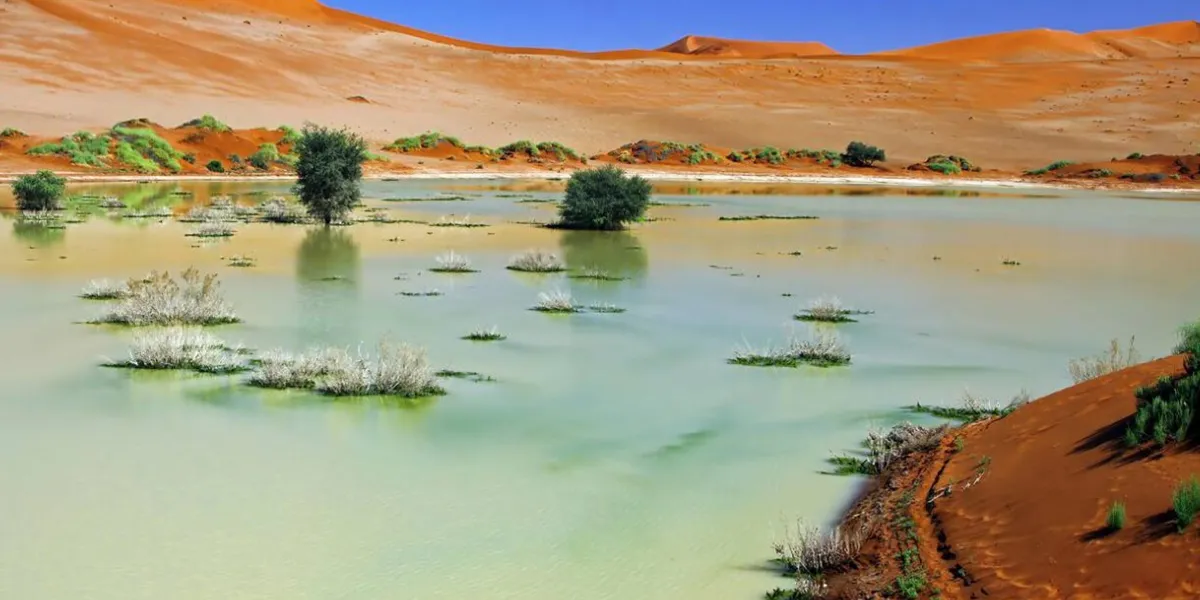
The Namib and Kalahari deserts are still iconic but due to heavy rains, the travelers might face soft sand or temporary waterlogged tracks. The scenic views such as Sossusvlei, Dune 45 and Sesriem Canyon are particularly photogenic in case of wet seasons and the lush vegetation is a striking contrast to the golden dunes. Taking a trip to the Namibia’s Attractions During the Rainy Season will guarantee that there are less people and less noise to disturb the peace and quiet, which is great in photography and exploring in peace.
Road and Transportation Conditions
Self-drive travel challenges
- Gravel Roads: Most of the roads in the rural and national park regions are unpaved and might be slippery or muddy during the rainy season. Travelers ought to be careful drivers and not to drive at night.
- Flood-Prone Routes: Seasonal rains may also flood the roads that are low especially the northern part of Namibia. Some of the tracks can be temporarily shut down hence it is important to check the local conditions before leaving.
- Vehicle Requirements: 4-wheel-drives are usually suggested in order to move safely in wet conditions.
Public and guided transport options
- Tour Operations: Guided tours and safari operators also run all year round and have vehicles that are fitted with adoptions to suit wet weather. The difficulty of accessing the road can be reduced by booking guided tours.
- Domestic Travel Services: Domestic flights, buses, and shuttle services are available all year round even in rainy seasons and offer an option to self-drive travel. These choices will enable the tourists to reach key attractions without having to worry about wet road conditions.
Impact of Rainy Season on Activities
Wildlife viewing conditions
- Animal Movement: In the rainy season, the wildlife is scattered across due to the abundance of water sources. Although it might take time before one sees animals, visitors can get an opportunity of seeing some rare activities such as mating, calving and juvenile animals.
- Density of vegetation: More vegetation cover means that some species are hidden and thus guided tours and experienced local guides are needed to see the wildlife to the fullest. There is also still richness in the biodiversity of the travelers with a lot of bird life and well-developed ecosystems which add to the safari experience.
Outdoor and adventure activities
- Limitations on Hiking: Mountain trails and national parks can be difficult to walk on or might be partly flooded, so one must be cautious. Safety will require proper hiking equipment and knowledge of the conditions of the trail.
- Seasonal Closures: There are certain adventure activities that may be restricted in access, e.g. desert trips, river rafting, off-road trips, etc. based on the amount of rainfall. Pre-booking with the local operators can guarantee the travelers to enjoy whatever they have planned in a safe manner.
Planning Tips for Rainy Season Travel
Choosing the right destinations
When visiting Namibia’s attractions during the rainy season, selecting the right regions is crucial. The wildlife lovers should go to the northern parks and the central and southern parks provide the experience of the desert with the green landscapes. The flexibility in itineraries enables the travelers to be flexible to changes in weather so that they can still be able to access major tourist attractions. The variety of experiences offered to tourists with a combination of desert and park destinations even in the rainy season is unpredictable.
Accommodation and travel preparation
The accommodation is usually possible, but remote camps and lodges can be impacted by flooding, which is temporary. It is advisable to book accommodation in advance in order to evade inconvenience. Tourists ought to take travel insurance, which covers weather related inconveniences, as well as bring waterproof garments and equipment. The idea of planning ahead to counter any delays makes the rainy season experience comfortable and smooth.
Rains are experienced during the months between November and April, and the highest falls are experienced during the months of January to March.
Yes, the national parks are not closed, however, not all the roads can be accessed in case of heavy rainfall.
They can drive themselves, but they need to be careful on gravel roads and on the routes where there is the possibility of floods. The guided tours are advisable.
Yes, animals are scattered because of a lot of water and thick bushes may complicate the process of seeing animals. Guided safaris enhance sightseeing opportunities.
Yes, the island hopping can be a glimpse of the local culture, unique landscape and marine life which is worth adding to short trips.
Absolutely the rainfall gives the deserts and savannahs in Namibia a green color that provides them with exceptional photo moments and serene sightseeing.
Conclusion
Visiting Namibia’s attractions during the rainy season provides a unique and rewarding experience. The lush sceneries, wildlife action, and reduced number of tourists make this season the best time to be in case one is interested in peace and nature. Although some of the roads and activities can be put on hold, proper planning and a loose schedule enables travelers to be able to make it through the wet months without any problems.
A Namibia Visa is the only thing that will guarantee an easy entry and proper equipment, travel insurance, and local orientation will ensure maximum enjoyment. Namibia in rainy season has a lot to offer to every tourist as it is a country that has breathtaking desert dunes to wildlife filled savannahs. With or without wildlife in Etosha, Sossusvlei, scenic drives, Namibia off-peak months have a side of the country to show, dynamic and peaceful at the same time. Go Kite Oman will be able to assist the travelers in efficient planning of their trip so that they have an unforgettable Namibian experience.


Leave a comment:
You must be logged in to post a comment.